Posts

Showing posts with the label Professor Pozzulo's Picks

Professor Pozzulo’s Pick (August, 2026)

Image
  Professor Pozzulo’s Pick (August, 2026) Look Again: The Power of Noticing What Was Always There by Tali Sharot and Cass R. Sunstein (2024) My take: Have you experienced that initial excitement of great news only to have that positive feeling wane shortly thereafter? Why doesn’t the positive feeling last very long?....habituation! What was thrilling one minute, becomes less thrilling as the hours pass. In Look Again: The Power of Noticing What was Always There, Sharot and Sunstein explore how we can dishabituate and the impact that it has on our well-being and quality of life. The authors discuss how our brains must prioritize what is “new and different” (e.g., imagine your usual walk in the woods but on this particular occasion a bear is in the distance running toward you) and as a result the brain filters out what is “old and expected”. The book examines how we can “resparkle” the positive things in our life and also re-notice the negative things (e.g., negative habits) so that...

Professor Pozzulo’s Pick (July, 2026)

Image
  Professor Pozzulo’s Pick (July, 2026) Born to Flourish: How New Science and Ancient Wisdom Reveal a Simple Truth to Thriving by Richard J. Davidson and Cortland Dahl (2026) My take: Why do some people navigate life’s challenges with resilience, while others are more vulnerable to stress-related disorders and poor mental health? One possible explanation lies in the ability to transform stress and anxiety into clarity, balance, and calm. In Born to Flourish: How New Science and Ancient Wisdom Reveal a Simple Truth to Thriving by Davidson and Dahl (2026), the authors explore two central questions: 1) What skills are essential for flourishing? and 2) Can we intentionally develop and strengthen our capacity to flourish? According to the authors, flourishing is a skill that can be developed through practice. With as little as 5-minutes a day we can rewire our brain for greater resilience, focus, and well-being. Davidson and Dahl created the Healthy Minds Framework highlighting four co...

Professor Pozzulo’s Pick (June, 2026)

Image
  Professor Pozzulo’s Pick (June, 2026) Once Upon a Stranger: The Science of How “Small” Talk Can Add Up to a Big Life , by Dr. Gillian Sandstrom (2026) My take: Ever feel like you want to chat, but everyone you know is busy? Why not venture down to your local coffee shop and strike up a conversation with the cashier, barista, or even the person standing in line? In Once Upon a Stranger: The Science of How Small Talk Can Add Up to a Big Life, Sandstrom explains the benefits of talking to strangers. If you’re anything like me, you may be thinking, “I’m not comfortable talking to strangers!”. But by the end of the book, you may be ready to give it a try. Sandstrom has made it her mission to understand why we feel anxious even thinking about talking to strangers and how pushing through our fears may give us massive well-being benefits and may even change our life. As Sandstrom demonstrates talking to strangers is a skill that can be learned and developed. The more conversations you ha...

Professor Pozzulo’s Pick (May, 2026)

Image
  Professor Pozzulo’s Pick (May, 2026) The Brain Never Sleeps: Why we Dream and What it Means for Our Health b y Karen van Kampen (2026) My take: What if your dreams could reveal how well you’re coping with the stresses of everyday life? In The Brain Never Sleeps: Why We Dream and What It Means for Our Health, van Kampen explores the science and art of dreaming, showing how our dreams can offer a window into our well-being. van Kampen examines why dreams are important and the impact they can have on our health and overall well-being. The book focuses on three key aspects of the relationship between dreams and mental health: 1) what dreams reveal about our mental health, 2) how our dreams change alongside our psychological well-being, and 3) why it is often impossible to hide from our worries and preoccupations - even in sleep. van Kampen explores the connection between our emotional state while awake and our emotional experiences in dreams. An increase in negative dreams, for exam...

Professor Pozzulo’s Pick (April, 2026)

Image
  Professor Pozzulo’s Pick (April, 2026) Art Cure: The Science of How the Arts Save Lives by Daisy Fancourt (2026, published by Celadon Books) My take: Do you enjoy listening to music, writing, crafting, or reading? You get the picture (pun intended). In Art Cure: The Science of How the Arts Save Lives, Fancourt examines how the arts affect both our physical health—such as lowering inflammatory markers in the body—and our psychological well-being by providing meaning and purpose in life. She guides readers through the scientific evidence on the benefits of the arts for people who are healthy as well as those dealing with illness. She also offers practical strategies for incorporating more art into everyday life. Each chapter focuses on a different dimension of health—brain function, mental wellbeing, pain, longevity—and offers practical ways to incorporate more creativity into everyday life. One of the most striking takeaways is the impact of creative activities on cognitive healt...

Professor Pozzulo’s Pick (Mar, 2026)

Image
  Professor Pozzulo’s Pick (March, 2026) Mattering: The Secret to a Life of Deep Connection and Purpose by Jennifer Breheny Wallace (2026, published by Portfolio) My take: Despite today’s all-consuming digital connectivity, many of us feel more disconnected than ever. In Mattering: The Secret to a Life of Deep Connection and Purpose, Wallace makes a compelling case that mattering is essential to a life of meaning and well-being. Wallace notes that “true mattering requires a balance between adding value to others and feeling valued ourselves”. An imbalance can leave us feeling emotionally drained and overwhelmed. Having people in our life who are invested in our growth facilitates our feeling of mattering. Wallace identifies five elements to building a “mattering core”: 1. Recognition – you and your actions are valued, and your absence would be felt 2. Reliance - you feel needed because others depend on you 3. Importance - you feel significant because you’re prioritized 4. Ego-exte...

Professor Pozzulo’s Pick (Feb, 2026)

Image
  Professor Pozzulo’s Pick (February, 2026) Defy: The Power of No in a World that Demands Yes by Dr. Sunita Sah (2025, published by One World) My take: Do you find yourself saying, “yes”, when you really want to say, “no”. In Defy: The Power of No in a World that Demands Yes, Dr. Sah will help you understand why we acquiesce and how we can say “no”. She helps you recognize the tension that surfaces and the stages of when the answer is a “true no”. This book is about learning to live in accordance with your values, that in turn, can support your well-being. Sah defines defiance as “acting in accordance with your true values when there is pressure to do otherwise”. She notes five stages of defiance; Stage 1 = tension Stage 2 = acknowledgement to ourselves Stage 3 = escalation (vocalize to others) Stage 4 = threat of non-compliance Stage 5 = act of defiance She highlights several real-world examples as how “going along” or complying can have dire consequences. Intriguingly, when you ...

Professor Pozzulo’s Pick (January, 2026)

Image
  Professor Pozzulo’s Pick (January, 2026) How to Winter: Harness Your Mindset to Thrive on Cold, Dark, or Difficult Days by Kari Leibowitz, Ph.D. (2024; published by Penguin Life) My take: Imagine living in a place where the sun doesn’t rise for two months a year. What impact would that have on your well-being? The data may surprise you. In How to Winter: Harness Your Mindset to Thrive on Cold, Dark, or Difficult Days, Leibowitz explores the connection between “seasonal variation” and well-being. And for anyone who’s not a fan of winter, Leibowitz might have you re-thinking your view on this colder, darker season and how to approach it for improved well-being. Leibowitz’s trek to Tromso, Norway (in the Artic Circle!) starts her journey on better understanding the relationship between winter and well-being along with discovering strategies that could be applied to improve mood. Leibowitz discovers that for residents of Tromso, winter was a season of excitement, something to look f...

Professor Pozzulo’s Pick (December, 2025)

Image
  Professor Pozzulo’s Pick (December, 2025) The Joy of Solitude: How to Reconnect with Yourself in an Overconnected World by Robert J. Coplan (2025, published by Simon & Schuster) My take: Do you consider solitude as something to be avoided or something to strive for? In The Joy of Solitude: How to Reconnect with Yourself in an Overconnected World , Coplan takes you on a journey of understanding what solitude means and how it can be positive for our well-being. Coplan also provides several strategies on how to make the most of your alone time for improved well-being. As Coplan states, spending time alone can make us feel “calmer, refreshed and revitalized”; it is restorative. Essentially, solitude allows us to recharge our emotional and cognitive batteries, which in turn makes us more present, improves our memory, and ultimately makes us more productive. An initial exercise that Coplan suggests you do is to keep track of how you spend your solitary time during a typical week....

Professor Pozzulo’s Pick (November, 2025)

Image
  Professor Pozzulo’s Pick (November, 2025) Nature and the Mind: The Science of How Nature Improves Cognitive, Physical, and Social Well-Being, by Marc G. Berman, Ph.D. (2025, published by Simon and Schuster) My take: What do you do when you are feeling depleted and can’t concentrate? Or feeling sad? In Nature and the Mind, Berman describes the science that demonstrates how experiencing nature improves our cognitive, physical, social, and emotional well-being. Not only can your physical health improve so can your mental health and your relationships. Spending time in nature is so impactful that it can even help with negative side-effects of certain drugs and treatments. Berman notes that the evidence for the benefits of spending time in nature is so compelling that the Canadian Medical Association endorsed a plan to provide Canadians with “social prescriptions” where Canadian health care practitioners can work with patients to come up with personalized nature plans to address their...

Professor Pozzulo’s Pick (October, 2025)

Image
  Professor Pozzulo’s Pick (October, 2025) Smartphone Nation: Why We're All Addicted to Our Screens and What You and Your Family Can Do About It , by Dr. Kaitlyn Regehr (2025, published by Knopf Canada) My take: Although smartphones seem ubiquitous, managing them so that your well-being isn’t negatively impacted can be challenging. In Smartphone Nation, Regehr (2025) provides a powerful, behind the scenes view of how tech firms control our screen time. She provides a practical guide on how to take back control and educate those who may be vulnerable. Regehr asks (and answers) several critical questions around “screen consumption”— what is our screen consumption doing to how we think and understand the world? She provides several strategies on how to take action so that the information coming at us is what we want rather than what the tech firms want to give us. Regehr also provides tips on spotting misinformation. This book is an education on technology, social media, and screen ti...

Professor Pozzulo’s Pick (September, 2025)

Image
  Professor Pozzulo’s Pick (September, 2025) Grit: The Power of Passion and Perseverance by Angela Duckworth (2016, published by Scribner) My take: Some people seem to get back up no matter how many times they get knocked down while others struggle and hold on to setbacks. The difference between these two conditions may be something called “grit”. In Grit, The Power of Passion and Perseverance, Duckworth (2016), explores what it means to have grit, how to develop it, and why it is important. Duckworth also provides several evidence-based strategies on how to become “grittier”. Are successful people simply more talented? More intelligent? According to Duckworth, having grit is more important. (Agreed!) So, what is grit? Grit is the “passion and perseverance for long-term goals that involves a sustained effort to achieve a future objective despite setbacks”. Duckworth discusses four essentials of grit 1) interest - being genuinely interested/having a passion, 2) practice –practicing...

Professor Pozzulo’s Pick (August, 2025)

Image
  Professor Pozzulo’s Pick (August, 2025) Good Anxiety: Harnessing the power of the most misunderstood emotion by Dr. Wendy Suzuki with Billie Fitzpatrick (2021, published by Atria Books) My take: I think for anyone who experiences “everyday anxiety” (or stress or nervousness), it may be hard to imagine anxiety as something that might be “good” (I fall into this category!). In Good Anxiety: Harnessing the power of the most misunderstood emotion, Suzuki takes you on a science-filled journey of how anxiety works in our brains and how you can change those pathways for a more “positive” experience. Suzuki makes a distinction between clinical level anxiety and everyday anxiety. Although, the mechanisms may be similar, the book is oriented toward coping and changing our perceptions and reactions to this type of anxiety. Not only is there a lot of science in this book, but there are also several case examples that help illustrate the information. Three themes that emerged throughout the ...

Professor Pozzulo’s Pick (July, 2025)

Image
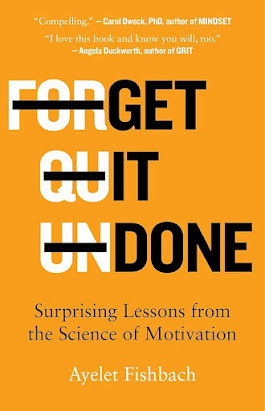
  Professor Pozzulo’s Pick (July, 2025) Get it Done: Surprising Lessons from the Science of Motivation , Ayelet Fishbach (2022, published by Little, Brown Spark) My take: Have you ever experienced that excitement to embark on a new goal (you’ll start Monday!), only to find that part way through to reaching your goal, that you lost interest, your motivation wanes. In Get it Done: Surprising Lessons from the Science of Motivation , Fishbach (2022) explores the complex construct of motivation. You’ll discover barriers to motivation and how to deal with them so you can reach your goals. Fishbach provides a fulsome examination of the science of motivation. She explores orientations such as cup half full or empty and what motivates under these different perspectives. Intriguingly, which part of the glass motivates you will depend on context and the importance of your goal. At the end of each chapter, a series of questions allow you to reflect to better understand the science and strategi...

Professor Pozzulo’s Pick (June, 2025)

Image
  Professor Pozzulo’s Pick (June, 2025) The Ritual Effect: From Habit to Ritual, Harness the Surprising Power of Everyday Actions by Michael Norton (2024, published by Scribner) My take: You may have heard of athletes engaging in a series of actions before each game, or maybe you yourself have a “ritual” that you do before some event that is important to you. In The Ritual Effect: From Habit to Ritual, Harness the Surprising Power of Everyday Actions , Norton reviews the science of rituals and how they can improve our mood and well-being. According to Norton, rituals have the ability to increase different emotions -– something he calls emodiversity – that in turn, can increase your well-being. Experiencing a greater range of emotions has been found to be related to increased mental (and physical) health. Norton presents a vast array of rituals from personal to those developed and used around the world. Take for example, the ritual of having a cup of tea with your partner after dinn...

Professor Pozzulo’s Pick (May, 2025)

Image
  Professor Pozzulo’s Pick (May, 2025) Humor, Seriously: Why Humor Is a Secret Weapon in Business and Life (and how anyone can harness it. Even you.) by Jennifer Aaker and Naomi Bagdonas (2020, published by Currency) My take: The science of humour? Does “science” and “humour” belong together? Turns out that they do! In, Humor, Seriously: Why Humor Is a Secret Weapon in Business and Life by Jennifer Aaker and Naomi Bagdonas (2021) you’ll learn about the evidence as to why bringing more humour into your life may improve your well-being. So, what is the connection between humour and well-being? For starters, the act of laughing or even the anticipation of laughing can decrease our stress hormone, cortisol, by about 39% and our fight or flight hormone, epinephrine, by about 70%, making you feel calmer and less stressed. Adding humour to information might even help you better remember. These were just some data the authors reported on. If you are thinking that you aren’t a very funny pe...

Professor Pozzulo’s Pick (April 2025)

Image
  Professor Pozzulo’s Pick (April, 2025) Inspire: The Universal Path for Leading Yourself and Others by Adam Galinsky (2025, published by Harper Business) My take: What an exhilarating book! In Inspire: The Universal Path for Leading Yourself and Others, Adam Galinsky takes you on a journey of “how to” inspire. You’ll find numerous evidence-backed approaches to move you along the infuriating-inspiration continuum. And as you move toward inspiration, the people you interact with will thank you. Galinsky states, “we can inspire others through our words, our actions, and our interactions”. Realizing we can choose to inspire is powerful. Galinksy unpacks the scientific evidence of what it means to be inspiring. He takes you “into” the research giving you a front row seat of how the research was conducted and what was found. This book is important and essential for anyone who interacts with even one other person, and that other person can be yourself. I was moved by the real-life exampl...

Professor Pozzulo’s Pick (March, 2025)

Image
  Professor Pozzulo’s Pick (March, 2025) The Positive Shift: Mastering Mindset to Improve Happiness, Health, and Longevity by Catherine A. Sanderson, Ph.D (2019, published by  BenBella Books ) My take: Are you naturally happy? If you answered “yes” to this question, Sanderson suggests that you won’t need to read her book, The Positive Shift: Mastering Mindset to Improve Happiness, Health, and Longevity. Although I consider myself on the “happier” side of the scale, I still read this book, and I’m so glad I did!  I’m happier that I did 😊!  Sanderson states that our level of happiness, our physical health, and even our longevity is connected to how “we think about ourselves and our world around us”. In other words, our mindset.  By making small changes we can improve our happiness and health (both mental and physical). And if you are wondering where to start, there are several self-assessments provided in the book to better understand your starting mindset. ...

Professor Pozzulo’s Pick (Feb, 2025)

Image
  Professor Pozzulo’s Pick (Feb, 2025) Move the Body, Heal the Mind by Jennifer Heisz, Ph.D (2022, published by Harvest ) My take: Perhaps the title gives away what this book is about. Move the Body, Heal the Mind by Jennifer Heisz, Ph.D. is certainly about exercise BUT it also is much more than that. Heisz shares her journey to improved well-being along with the science behind the connection of physical exercise and mental well-being. In this book, you will find several exercises (literally) that might help improve your well-being. Heisz begins by sharing how a personal crisis pushed her to a new year’s resolution of fitness, and more specifically a triathlon. I was happy to learn that I didn’t need to share Heisz’s ambitious goal in order to improve my own physical and mental well-being. Even some movement can be helpful! Heisz provides a practical approach to increasing your physical activity and the benefits that are associated with “moving more”. Heisz offers a number of sugge...

Professor Pozzulo’s Pick (Jan, 2025)

Image
Professor Pozzulo’s Pick (Jan, 2025) How to Change: The Science of Getting from Where You Are to Where You Want to Be  by Katy Milkman (2021; published by Portfolio ) My take: Feeling like you need a change? Finding it hard to make a change “stick”. Perhaps you’re using an ineffective strategy or approach. In How to Change: The Science of Getting from Where you Are to Where You Want to Be, Milkman (2021) reviews the science of how to make behaviour change last with several evidence-based strategies to help you reach your goals. Milkman examines the steps you can take to make changes that can improve health and well-being. Milkman’s expertise in “change behavior” makes this book not only educational by explaining the science behind behavior change but also provides a “how to” to achieve your desired change. Each chapter examines an internal obstacle that stands between you and achieving your goal. By the end of the book, you’ll learn how to recognize the obstacles and what you can d...